Controller has power, but zones stay dry
The display and schedule may look normal even when one or more stations do not operate. The cause may be outside the controller.
Existing residential systems • Oʻahu
A controller can appear to run while a zone stays dry. Cut wiring, loose connections, failed solenoids, valve problems, incorrect programming, or earlier system changes may be the real cause.
Text the property address, a photo of the controller, and a short description of what the system is doing.
Common controller and wiring symptoms
The controller is one part of an electrical and hydraulic system. Testing helps identify whether the problem begins at the timer, wiring, solenoid, valve, or another system component.
The display and schedule may look normal even when one or more stations do not operate. The cause may be outside the controller.
A zone may start only sometimes because of a loose connection, damaged wire, failing solenoid, valve concern, or controller issue.
Different areas may be operating from separate controllers or battery-powered nodes after the system was installed or changed over time.
Power, internal controller condition, wiring, and programming should be checked before deciding whether replacement is appropriate.
Accessible field wires may be cut, corroded, crossed, disconnected, or abandoned, making station-by-station testing important.
A compatible controller and network connection can provide remote access, but the underlying zones still need to operate correctly.
What Distinct Irrigation checks
Confirm the controller has dependable power, review schedules and station assignments, and operate stations individually.
Compare what the controller indicates with what each affected irrigation zone actually does in the field.
Trace accessible controller-to-valve wiring and inspect connections for cuts, corrosion, crossed conductors, or other visible damage.
Test accessible solenoids and their connections to separate an electrical problem from a valve or water-flow problem.
Determine whether a focused connection repair, new field wire, or another practical correction can restore reliable operation.
Consider replacement only when the controller’s condition, station capacity, reliability, or remote-access needs justify it.
Repair versus replacement
A new controller will not repair a cut wire, failed valve, broken pipe, or bad solenoid. Diagnosis comes before equipment replacement.
Controller replacement is appropriate when its condition, station capacity, reliability, or remote-access needs justify the change.
Text a controller photoReal Haleʻiwa project
This large existing residential irrigation system had been installed or modified in different stages. Two front stations operated from separate battery-powered nodes, and damaged and cut field wiring was found.
Approximately 400 feet of new multi-conductor irrigation wire was run. All 13 active stations were connected to one Hunter X2-1400 14-station controller, with one controller station left unused for possible future use.
A Hunter WAND module provided Wi-Fi and Hydrawise remote access. The 14-station controller had one station remaining unused.
Damaged field wiring was corrected, and broken sprinkler heads and multiple irrigation-line breaks were repaired as part of the completed work.
Each of the 13 active stations was operated after the controller, wiring, line, and sprinkler repairs were completed.
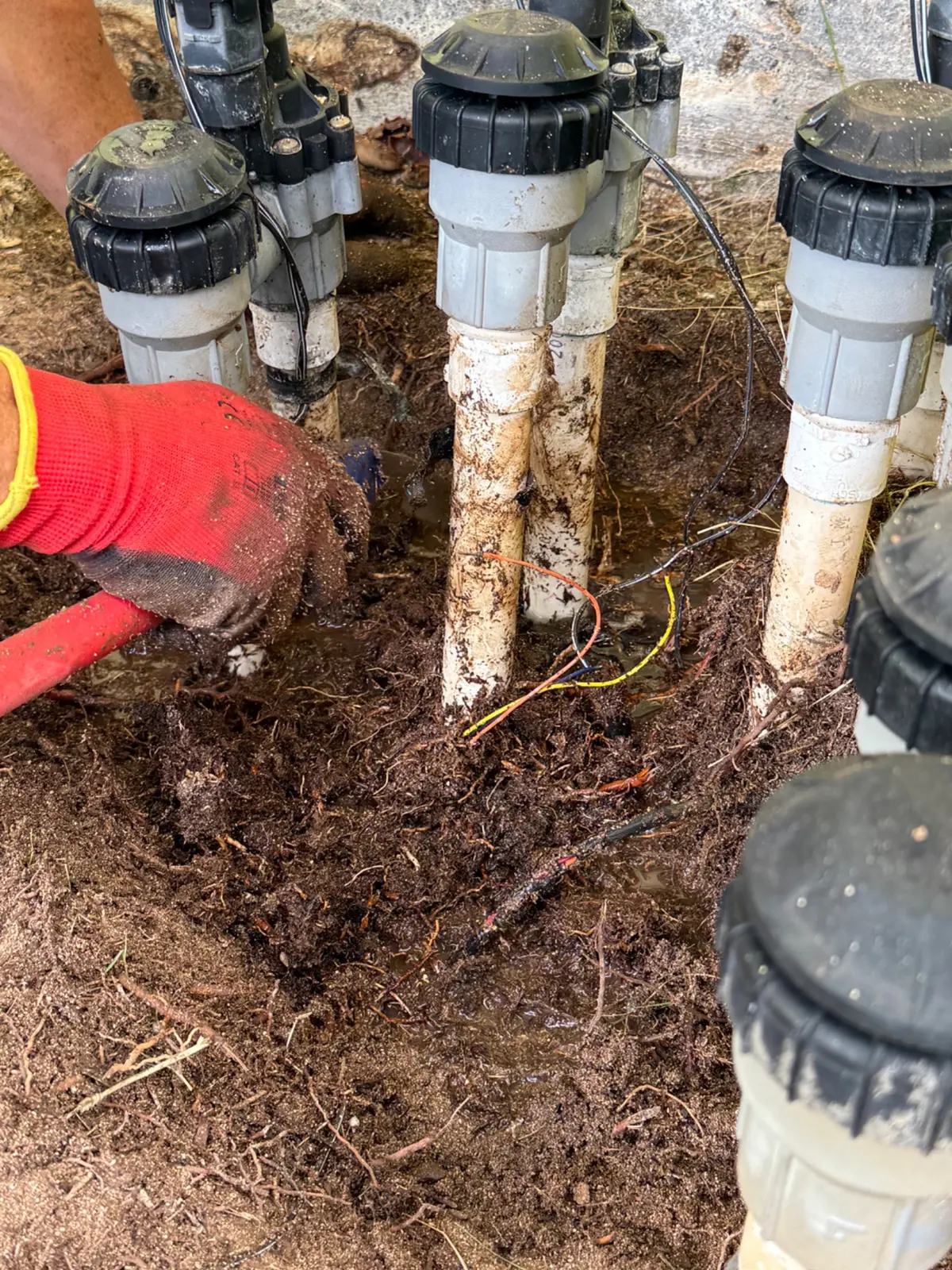
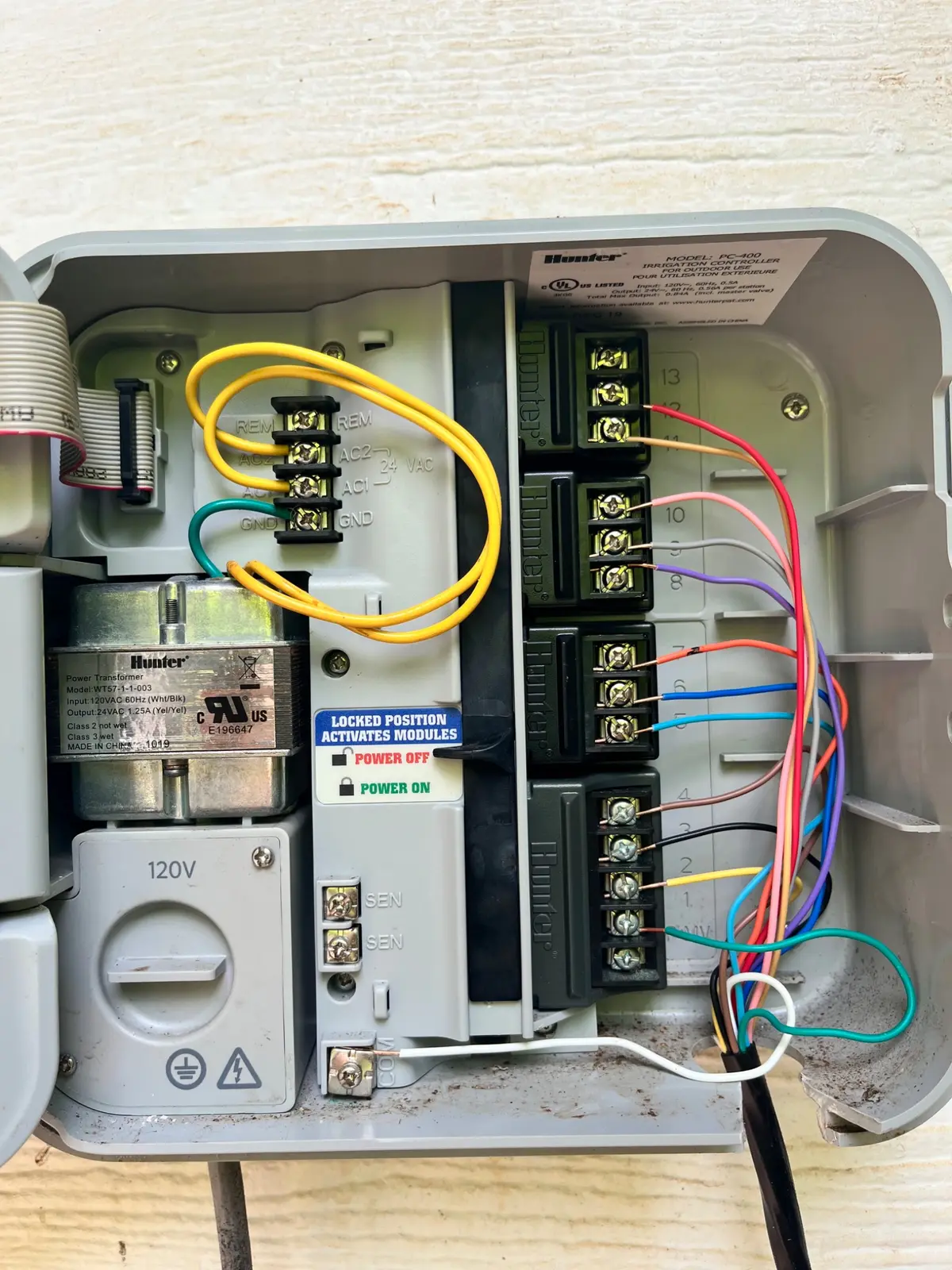
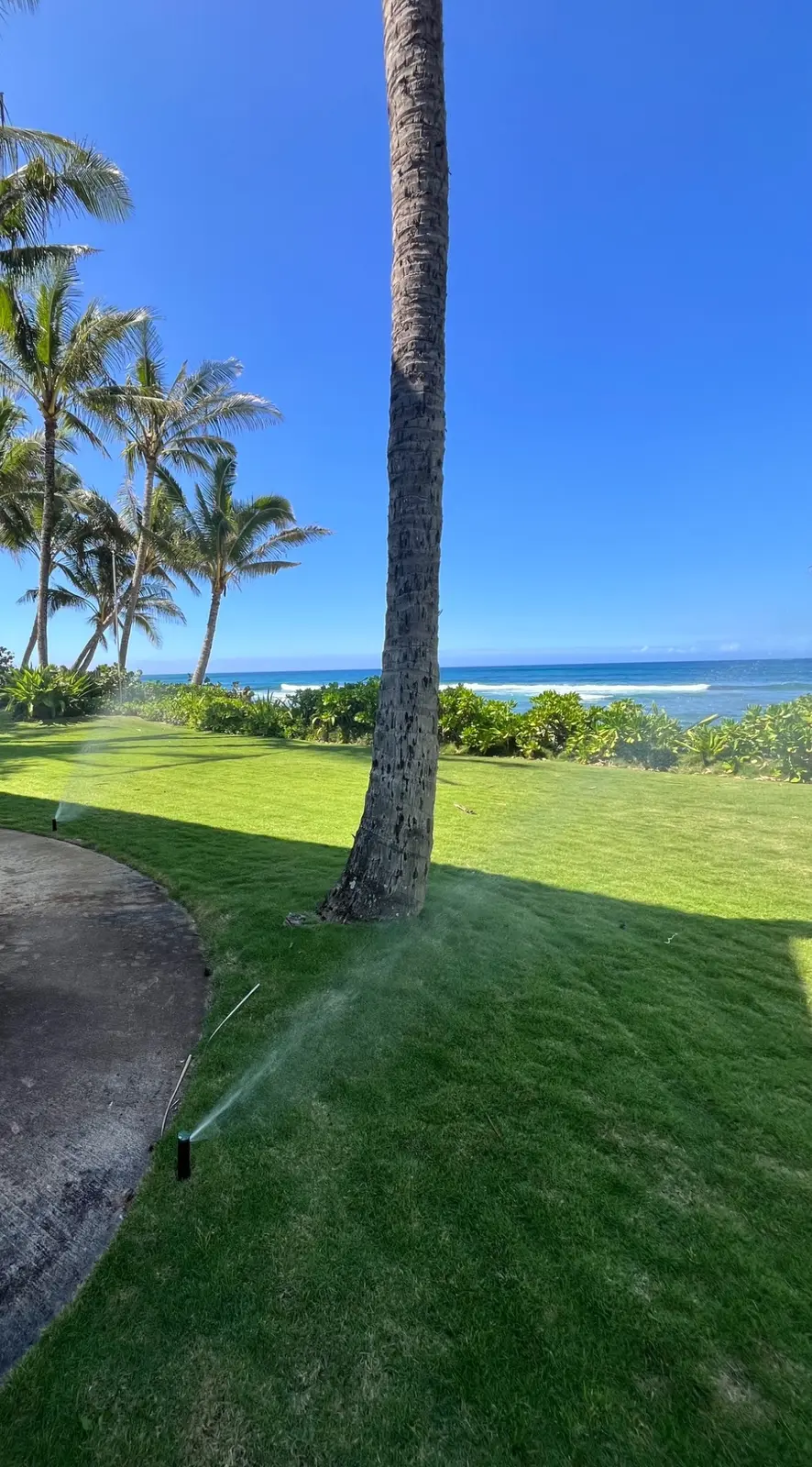
The controller photograph is a wiring-reference image, not the newly installed controller. This is one completed repair example; conditions, access, and repair scope vary by property.
Existing residential systems only
Distinct Irrigation troubleshoots, repairs, rewires, and replaces controllers on existing residential irrigation systems.
Text controller details →Review Irrigation Repair, Sprinkler Valve Repair, or the Whole-System Checkup. Distinct Irrigation does not install complete new irrigation systems.
View Contact options →Frequently asked questions
These answers explain common service situations; a specific property still requires testing.
The symptom alone usually cannot confirm the failed part. We operate the affected station, check controller output and programming, inspect accessible wiring and connections, and test the solenoid and valve before recommending a repair.
Not necessarily. A new controller will not repair a cut field wire, failed solenoid, valve problem, or broken irrigation line. The zone should be diagnosed first.
Sometimes. It depends on accessible field wiring, controller capacity, system layout, and whether the existing zones can be reliably connected and operated from one location.
Yes, on existing residential irrigation systems. Troubleshooting comes first, followed by a recommendation based on controller condition, reliability, station needs, and available repair options.
A compatible Wi-Fi controller can provide remote access through its supported app when the property has a dependable internet connection. Remote access does not replace field testing or repair of failed system components.
No. Distinct Irrigation troubleshoots, repairs, rewires, and replaces controllers on existing residential irrigation systems. We do not install complete new irrigation systems.
Request controller or wiring service
Text the property address, a controller photo, what happens when the affected station is started, and which zones are affected if known.