Spray shoots sideways or straight into the air
A damaged, missing, clogged, or incorrect nozzle can send water away from the intended landscape.
Existing residential systems • Oʻahu
A sprinkler can rise and spray while leaking underneath. Broken bodies, nozzles, risers, fittings, swing pipe, and nearby lateral connections can waste water and reduce coverage even when the head appears to operate.
Text the property address, a close photo or short video, and what the sprinkler does while the zone is running.
Common sprinkler-head symptoms
The visible spray does not always reveal the failed part. Testing and inspection help separate a nozzle or body problem from damage below ground or elsewhere in the zone.
A damaged, missing, clogged, or incorrect nozzle can send water away from the intended landscape.
A cracked body, damaged riser, loose fitting, broken swing pipe, or nearby lateral connection can leak below the surface.
Debris, damage, pressure behavior, or a worn sprinkler body can keep a head from operating normally.
Grade changes, soil movement, vehicle contact, landscape work, or age can leave a sprinkler out of position or damaged.
A tilted head, incorrect direction, damaged nozzle, or unsuitable placement can create overspray and runoff.
The cause may involve head position, nozzle performance, pressure, flow, spacing, or another zone-level concern.
Repeated wetness near a head can point to a body, fitting, swing-pipe, riser, or localized pipe leak.
What Distinct Irrigation checks
Inspect for visible cracking, clogging, wear, missing parts, poor retraction, and leakage while the zone operates.
Expose accessible connections when needed and check whether movement, impact, or damage has affected the head assembly.
Look for a broken tee, elbow, connector, or localized pipe damage that may be feeding a leak at the sprinkler.
Observe how the head rises, sprays, and shuts down, and whether nearby heads show a broader pressure or flow concern.
Check whether the sprinkler is upright, positioned at a practical height, and directing water toward the intended area.
Compare the visible spray with the surrounding landscape to identify dry gaps, overspray, obstruction, or uneven watering.
What can be repaired
Service can include existing residential pop-ups, nozzles, risers, swing-pipe connections, fittings, head height and angle, and localized pipe damage.
Buried or inaccessible components may require excavation or additional testing. A complete repair cannot be promised before the actual condition and access are known.
Text a close photoReal Haleʻiwa project
At a Haleʻiwa residence, a pop-up sat beside a curved, uphill driveway where tires occasionally crossed the grass. A tire caught or pressed the pop-up, breaking the underground tee and creating a hairline crack that continued into the older, thinner-wall PVC.
The area was excavated and the damaged line was cut on both sides. New PVC, a tee, connector, elbow, swing pipe, and pop-up were installed. The repair was tested successfully and backfilled.
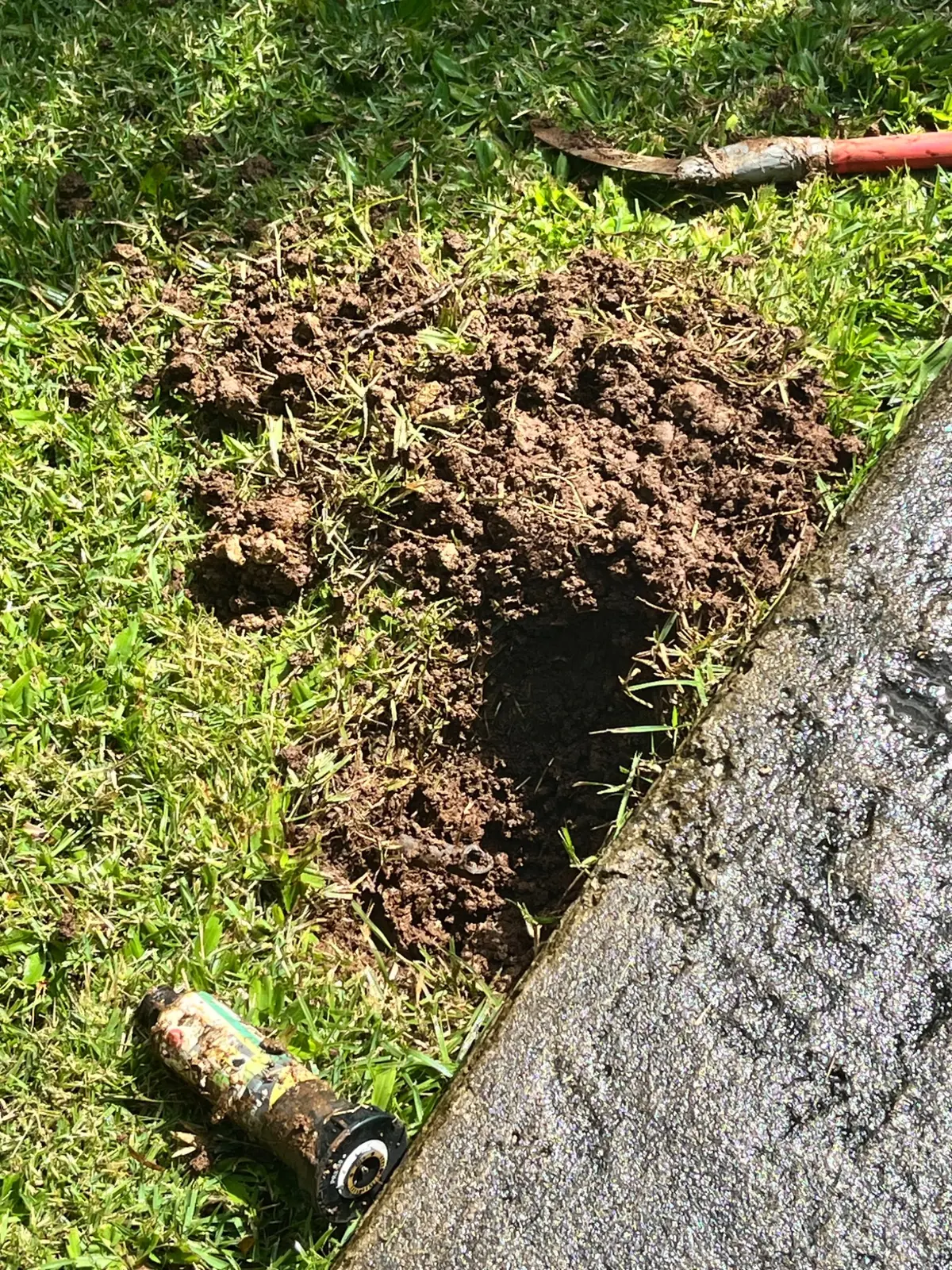
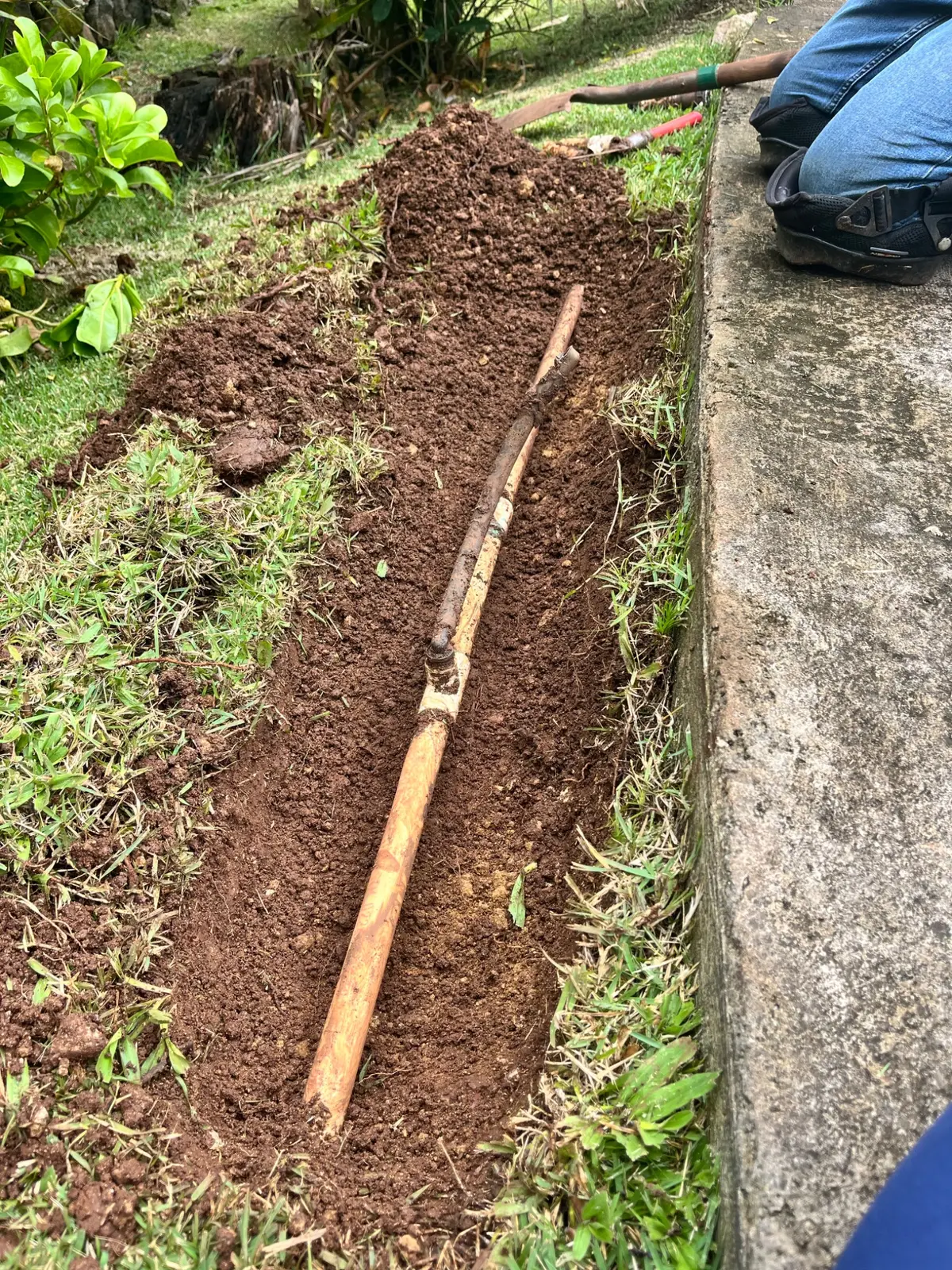
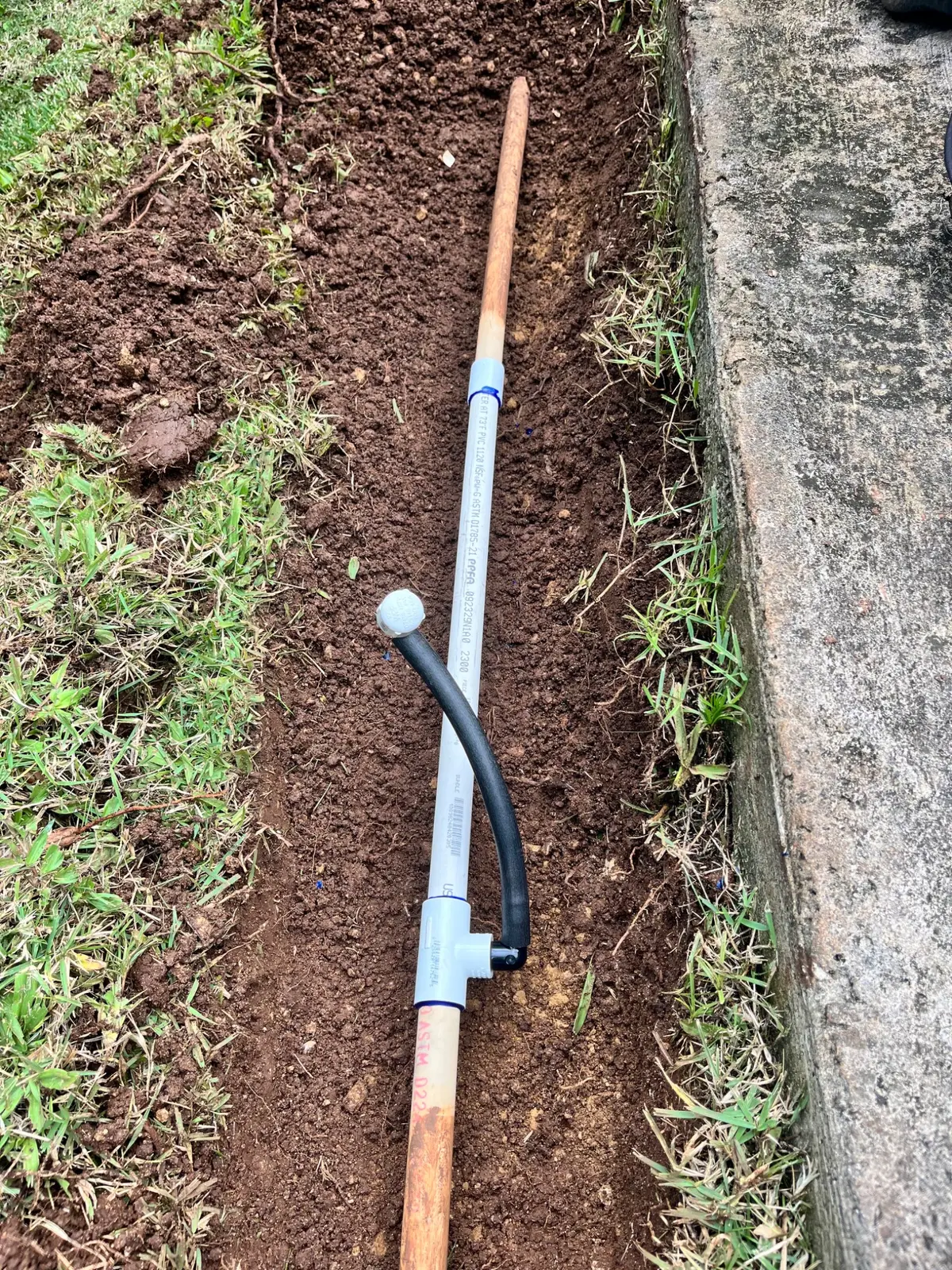
Swing pipe adds movement at the sprinkler connection, but it does not make the head immune to vehicle damage. Keeping tires off the grass is the best protection.
Found during a Whole-System Checkup
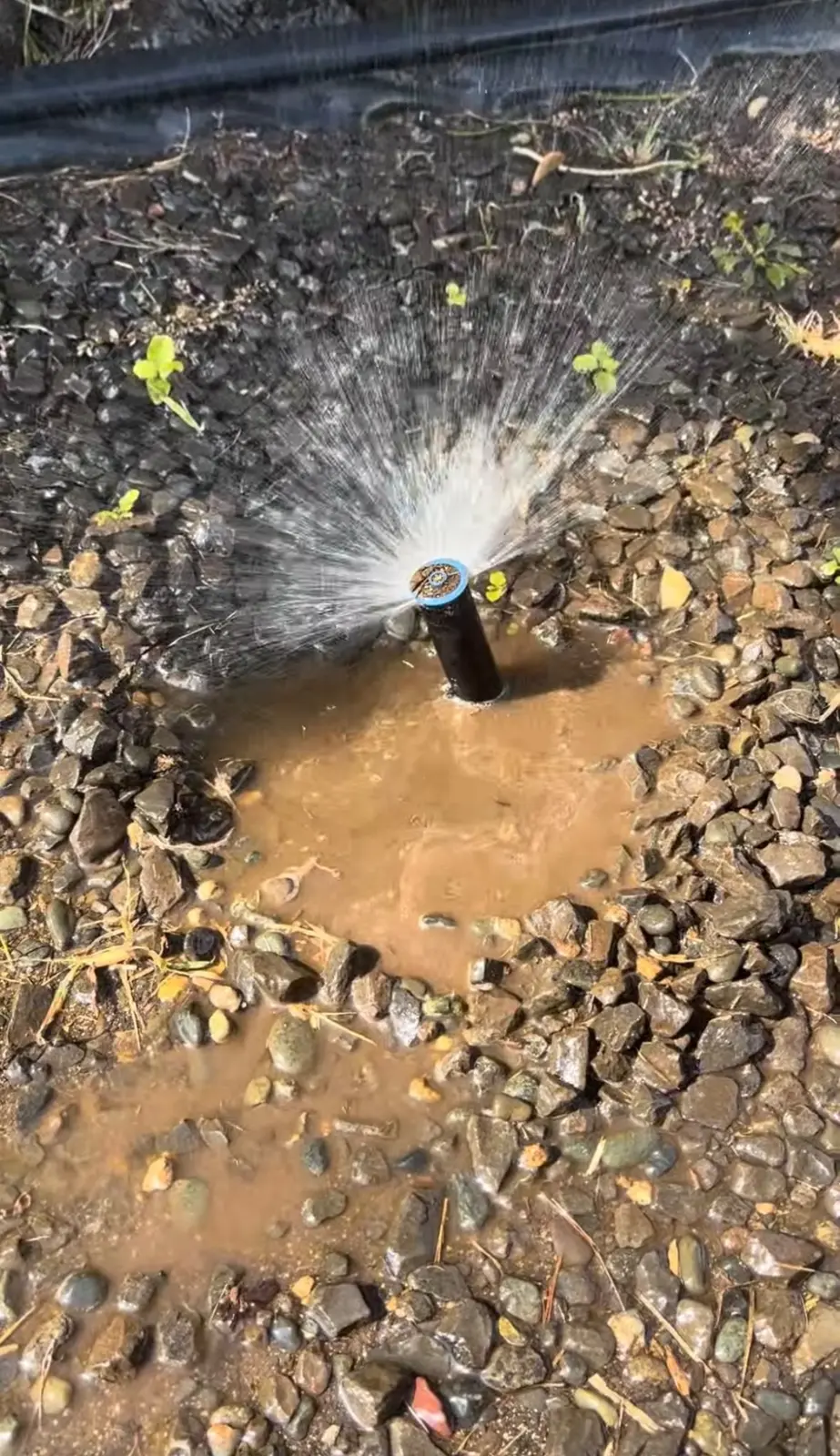
During an initial Whole-System Irrigation Checkup at a Haleʻiwa residence, two pop-ups in gravel near roadside parking rose and sprayed even though their bodies were broken near the bottom. The leaks created puddles without an obvious major pressure loss.
Vehicle pressure was a likely cause, but it was not proven. Both areas were excavated, and the swing pipe and PVC lateral were inspected with no cracks found. The sprinkler bodies were replaced, and the zone tested correctly with no remaining leaks.
Both pop-ups rose and sprayed, so the broken bodies were more apparent from the water leaking and pooling around their bases.
After the bodies were replaced, the zone operated correctly and no remaining leaks were visible at the repaired locations.
Existing residential systems only
Distinct Irrigation repairs sprinkler heads and related localized components on existing residential irrigation systems.
Text sprinkler details →Review Irrigation Repair, Irrigation Leak Repair, Controller & Wiring Repair, or the Whole-System Checkup. Distinct Irrigation does not install complete new irrigation systems.
View Contact options →Frequently asked questions
These answers explain common service situations; a specific property still requires testing.
Water can escape from a cracked sprinkler body, damaged riser, loose fitting, broken swing pipe, or nearby lateral connection. The area may need to be exposed and operated before the source can be confirmed.
The nozzle may be damaged, missing, clogged, loose, or pointed incorrectly. A tilted or damaged sprinkler body can also change the spray direction.
Yes. A pop-up can still rise and spray while a crack near the bottom of the body releases water below ground and causes bubbling, mud, or pooling.
Repeated damage can come from vehicle or equipment traffic, a head set too high, unstable soil, landscape work, or an unsuitable connection. Swing pipe can add movement, but it does not make a sprinkler immune to impact.
Often, yes, when the existing connection and surrounding conditions allow a practical adjustment. The head, grade, fittings, and nearby pipe still need to be checked first.
Yes. A nearby lateral-line break, fitting leak, pressure problem, or valve concern can create similar symptoms. Operating the zone and inspecting the relevant components helps separate the causes.
No. Distinct Irrigation repairs sprinkler heads and related localized components on existing residential irrigation systems. We do not install complete new irrigation systems.
Request sprinkler-head service
Text the property address, a close photo or short video, what the zone does while running, and the affected area or zone if known.